
Finding Plymouth Township Resident Records
Begin with the record keyed to the fact already known. An address works best in the township property inquiry, the county tax search, and the parcel map. A name can lead to a deed party, a court index, or a historical directory. For a past household, date matters as much as the name. Plymouth Township and the independent City of Plymouth share a postal identity, but they do not share all municipal records. Keep the parcel municipality, the source date, and the spelling used by the record.
These sources identify different relationships. An assessment card can connect an owner with a parcel. A recorded deed can show a transfer. A directory can place a head of household at an address in a particular year. None creates a complete current household list. Treat each result as one piece of evidence, then corroborate it with another independent record when a name or address matters.
- Search the Plymouth Township BS&A property inquiry by address, name, or parcel number.
- Confirm the parcel and its municipality in the Wayne County GIS viewer or Treasurer search.
- Use the owner or legal-description clue in the Wayne County Register of Deeds index.
- For an older address, compare directory, newspaper, census, and Museum holdings by year.
- Request a specific existing record from the custodian when the needed file is not online.
Plymouth Township Records Offices
The township assessor, Wayne County land-record offices, Michigan election officials, and the local Clerk each keep a distinct part of the resident trail. The assessor ties current tax and property information to a parcel. The Register of Deeds indexes recorded land instruments. The Clerk is the proper municipal route for township documents and Freedom of Information Act requests. For a full address-by-address chain, use the Plymouth Township Street Directory after confirming which municipality owns the parcel.
Wayne County Register of Deeds
Land Records and historic index routes
Detroit, Michigan
313-224-5851
Plymouth Township Assessing
Township property and assessment records
9955 N. Haggerty Road, Plymouth, MI 48170
Use the township property gateway
Michigan Voter Information Center
Registration and polling-place information
Statewide self-service lookup
Formal files go through Bureau of Elections
Plymouth Township Parcel Record Clues
The Township's BS&A Online Property Inquiry is the best first stop when a street address, owner surname, or parcel number is available. It offers Address, Name, and Parcel Number search modes and lists Name, Reference #, and Address in its results. The public counter confirms that assessment records can include taxpayer and mailing information, the property address, parcel size, legal description, building characteristics, and sale prices if known. Availability and year depth vary, so ask the assessor about an older card or unclear field.
| BS&A field | How it helps a Plymouth Township search | Result context |
|---|---|---|
| Address | Find a specific property or range | Links a situs address to a parcel |
| Name | Find parcels tied to a first and last name | Ownership clue, not household proof |
| Parcel Number | Use the formatted township or county identifier | Best bridge to tax, GIS, and deed work |
| Detailed Record Search | Moves to available assessment, tax, or building categories | Features can vary by service |
Plymouth Township's property-inquiry gateway explains that the public portal is provided without a warranty of completeness. That warning is useful: the card is a current public-record lead, not a final answer about every person connected with an address.
The Plymouth Township Clerk records page shows the municipal office that routes official township records, elections, and FOIA contacts.
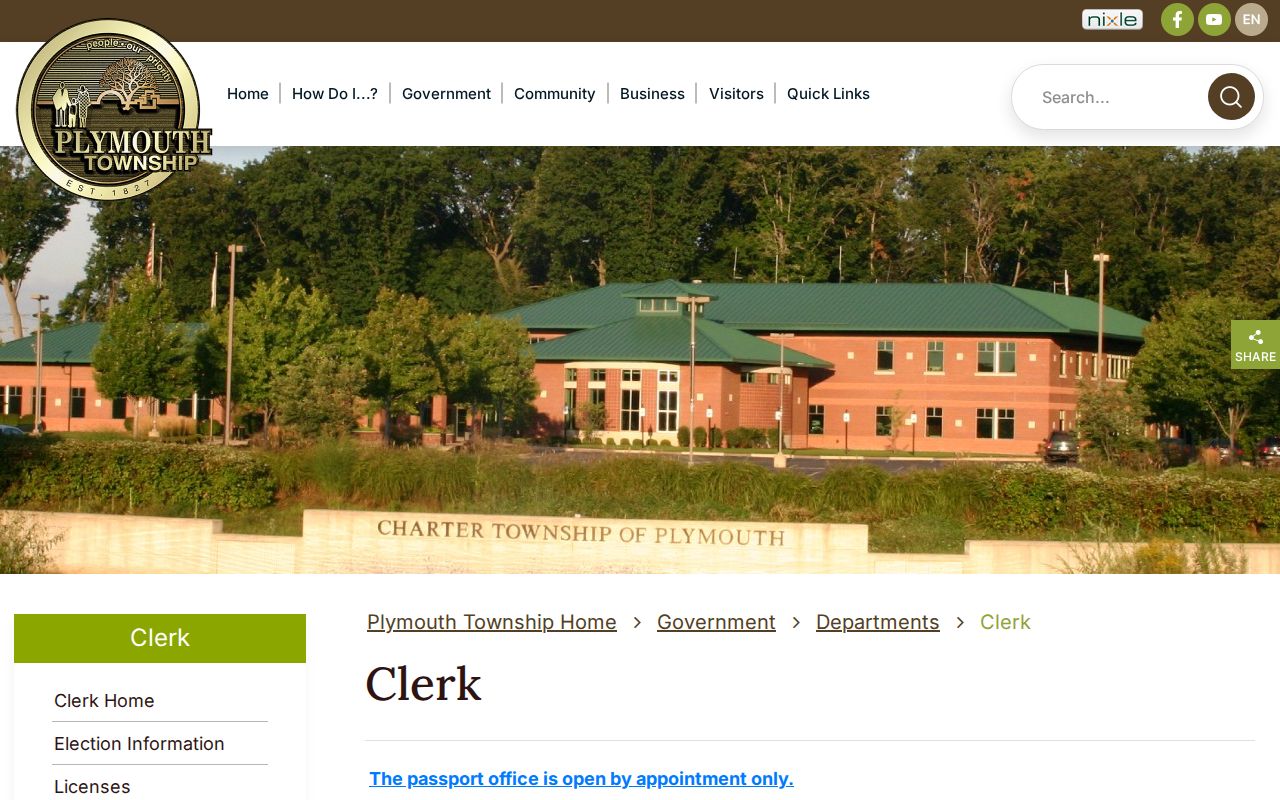
The screenshot reinforces that township records are routed by department, while parcel details belong with assessing rather than a general municipal name list.
Plymouth Township Address Record Boundaries
Plymouth Township is a western Wayne County charter township, separate from the independent City of Plymouth. Both commonly use Plymouth, Michigan 48170 in a mailing address. That overlap is a frequent false match in a resident search. A City Clerk, city cemetery, or city permit record may be accurate for a city address and still say nothing about a township parcel. Keep the municipality value from the Treasurer or parcel system and inspect the parcel polygon before choosing a custodian.
Wayne County describes the township as roughly 16.6 square miles, while the independent city covers 2.27 square miles. The difference matters most near the shared postal identity. A ZIP or mailing-city result establishes delivery geography, not municipal jurisdiction. Parcel data, tax records, and the official GIS map provide the stronger location check.
Wayne County's Plymouth Township profile distinguishes the township from the city in its community description.
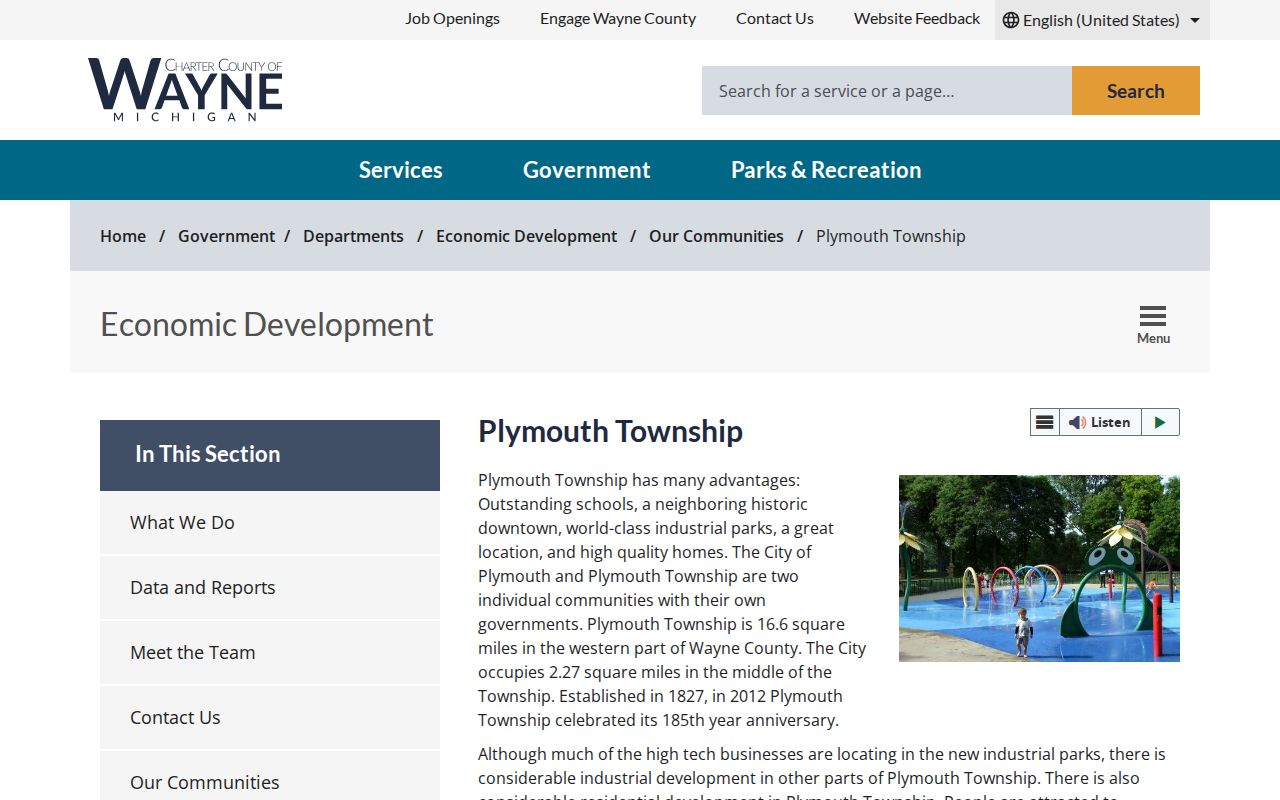
Use that separation before a records request, a deed search, or an archive inquiry, especially when an older record gives only Plymouth as the locality.
Plymouth Township Voter Records Route
The Michigan Voter Information Center is a self-service tool for a voter to check registration status, address, polling place, and election information. It is not a public browser for a street or block. Broader voter-file access uses a Bureau of Elections request, subject to use restrictions and the omission of protected information. Michigan's ordinary voter model does not make ballot choices public, and the public process must not be used to publish a protected address.
The township's current election materials add a practical address check. Twelve precincts were consolidated to six, so a historical polling reference can be stale even when an address is right. Use the live state lookup for a current polling location. The township precinct map supplies geography only, not a resident roster.
Michigan Voter Information Center is the official route for a person's own registration and election details.
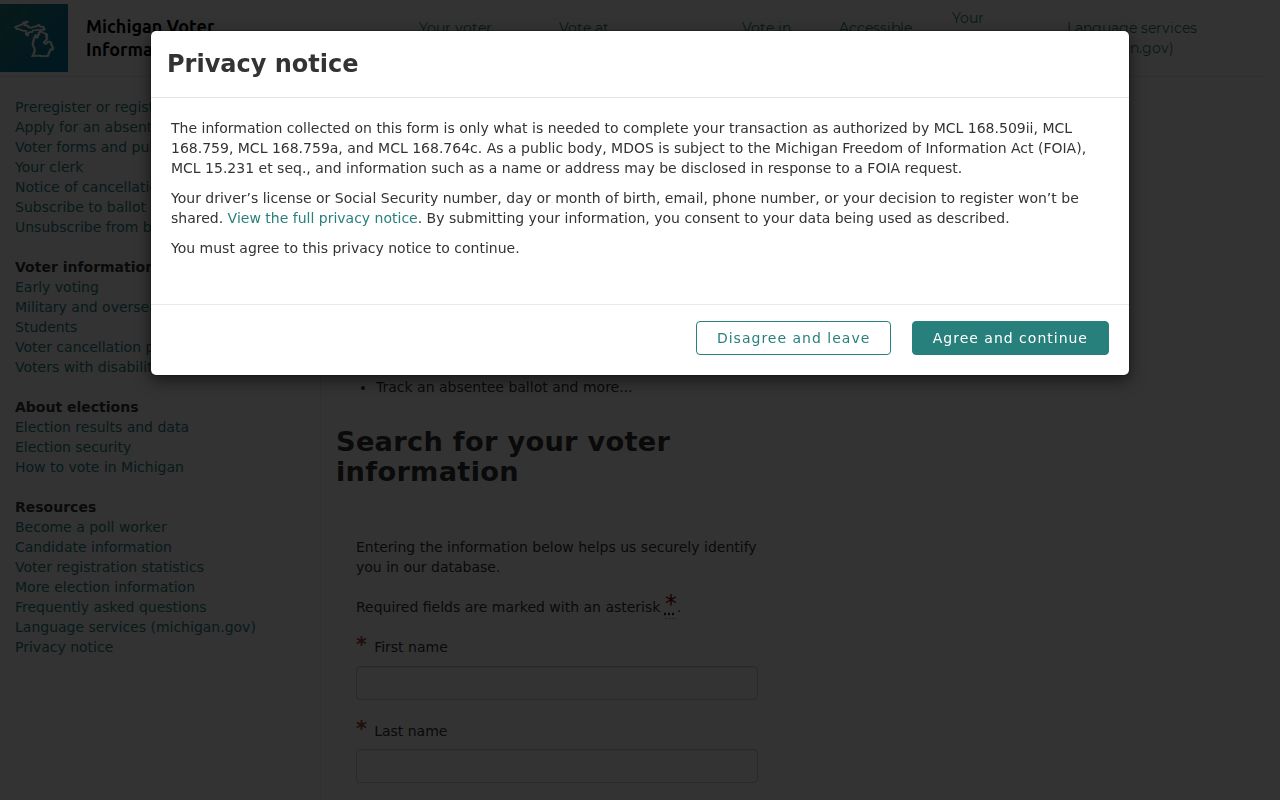
The lookup's account-specific nature is why a voter result should support, not replace, a property, court, or historical-record check.
Plymouth Township Current Directories
There is no single official roster of Plymouth Township residents. The useful current sources are purpose-built rolls. Assessment and tax systems document parcels and owners. The deed index documents parties to recorded instruments. Court, professional-license, business, and unclaimed-property tools each cover a narrower public relationship. Community association pages can provide public contacts and neighborhood facts, but the inspected sources do not publish member rosters. Match the source to the question instead of trying to turn one index into a complete directory.
| Source | Who It Lists | Keeper | Access |
|---|---|---|---|
| BS&A assessment record | Owners and parcel relationships | Plymouth Township Assessing | Current public search; details vary |
| Wayne Treasurer search | Address, parcel, municipality, delinquency | Wayne County Treasurer | Free public portal |
| ROD land index | Grantors, grantees, and instruments | Wayne County Register of Deeds | Free name listing; expanded access paid |
| MiCOURT case index | Parties in public court matters | 35th District Court/Michigan courts | Public index; records have limits |
| Michigan MiPLUS | Professional credential information | LARA | Free statewide verification |
An address question usually begins with BS&A and the parcel map. A one-person question may need a careful name-and-date comparison across the court index, a public record, and an historical source. The Plymouth Township Resident Lookup keeps that verification workflow distinct from an address search.
Plymouth Township Name Records Verification
A public court index can be a useful second source when a name needs confirmation, but it is not a resident list. Plymouth Township is within the 35th District Court service area, alongside Plymouth City, Canton, Northville Township, and Northville City. MiCOURT supports a court-specific search route. The court's records page describes online access, a public terminal, and record-check requests by mail, fax, or email. Search fields documented for the interface include last name or business, first or middle name, birth year, case number, and date range.
Vital records answer a different question. Michigan MDHHS is the authoritative route for certified birth, death, marriage, divorce, and acknowledgment-of-parentage copies. It is not an open name directory, and recent birth records are restricted. Michigan registration begins in 1867 for birth, death, and marriage, and in 1897 for divorce. The genealogy release rule in MCL 333.2885 uses different age periods by record type, subject to sealing and other restrictions.
Wayne County Clerk Records Division explains its circuit-court and county-record access channels.
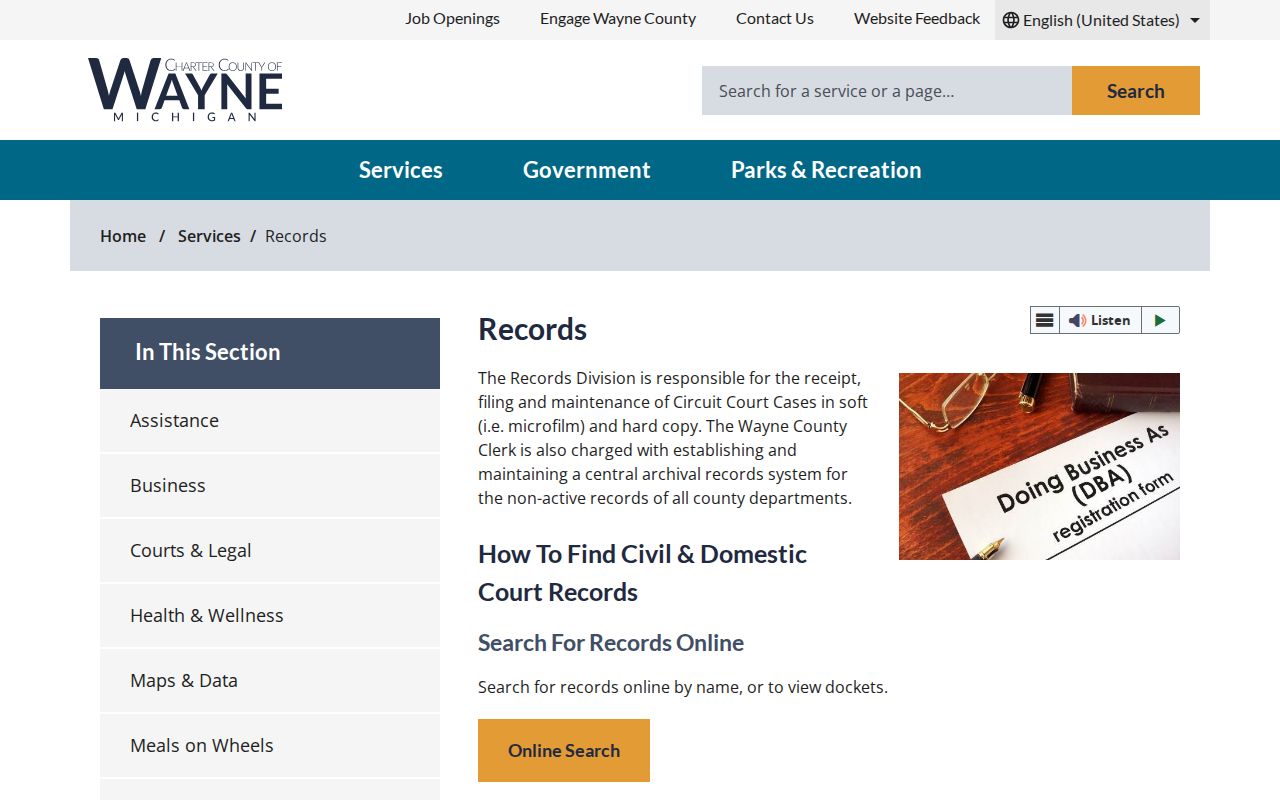
The County Clerk's records information is a reminder that a court file, an archival file, and a vital certificate can have separate custodians and access rules.
Plymouth Township FOIA Record Requests
When a township record is not online, Michigan's Freedom of Information Act, 1976 PA 442, MCL 15.231 et seq., provides a request process for identifiable existing public records. The request should describe the record sought rather than ask an office to create a resident list or conduct open-ended research. Plymouth Township directs requesters to its electronic center or to the FOIA Officer, Clerk Kim Gaedeke, at Township Hall. The research notes an ordinary five-business-day response period under the Act and one extension of up to ten business days.
The township warns that an information request can itself become a public record. State law also allows review for privacy, confidential information, and other exemptions. Request a defined permit, meeting record, inspection document, or correspondence by address and date where possible. That gives the Clerk or department a searchable target and avoids assuming that every document is open in full.
Plymouth Township's FOIA page provides the electronic and paper-request routes.
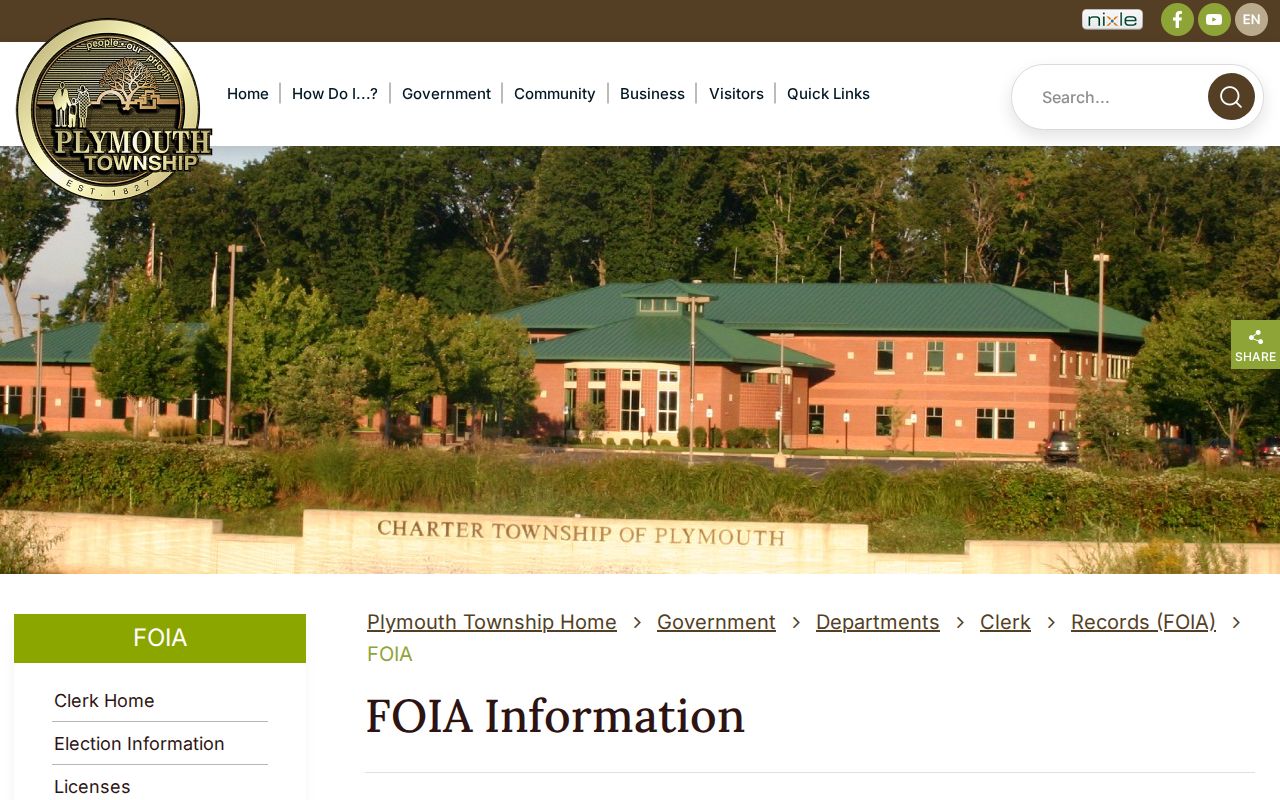
The portal is for a specific public-record request, not a substitute for an assessor, court, or library search designed for a particular record type.
Michigan Attorney General FOIA guidance summarizes requester rights, response timing, and fee principles under state law.
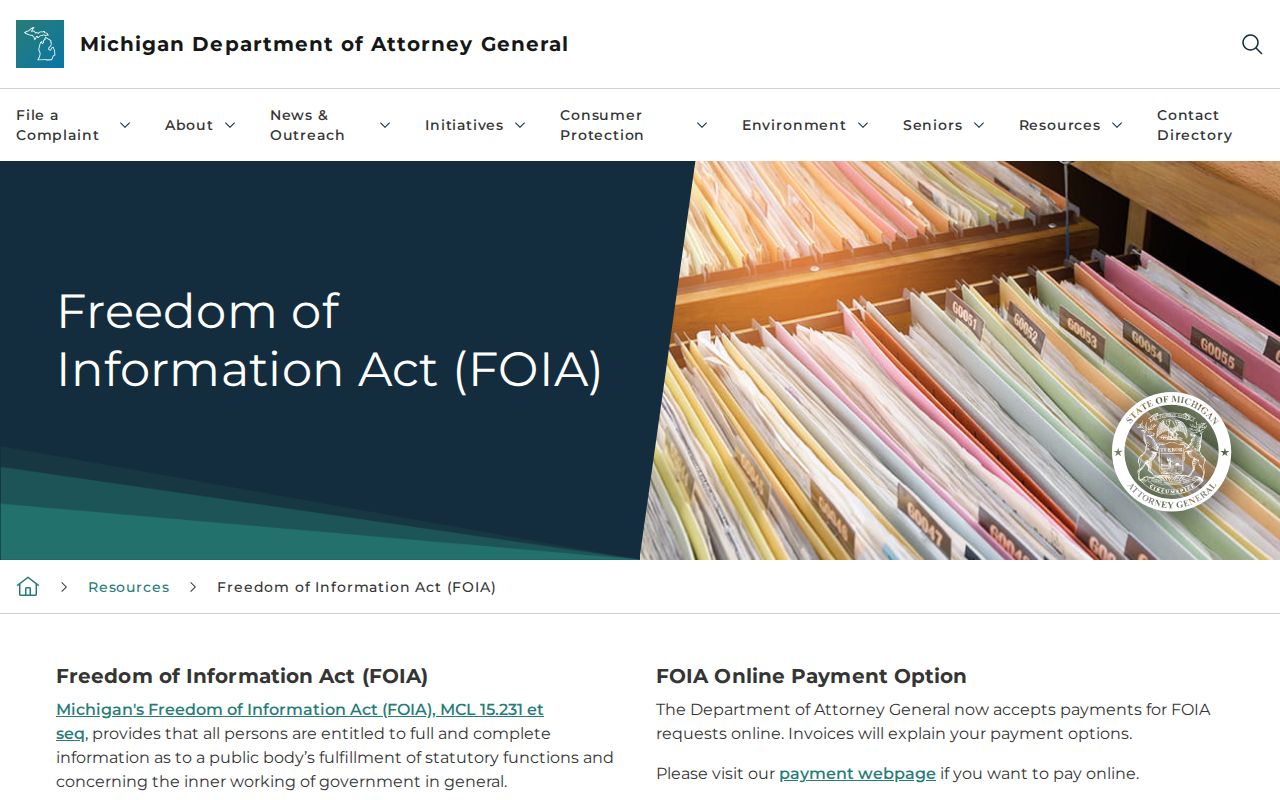
The statewide guidance helps a requester understand the process, while the township Clerk remains the custodian for local township records.
Note: Ask for the existing record and date range, then let the custodian apply the required privacy review.
Plymouth Township Historical Directories
Older Plymouth records are a relay between local repositories. Verified Plymouth/Northville directory years include 1938, 1941, 1943, 1946, 1948, 1951, 1953, 1956 through 1960, plus a locally reported 1976 bicentennial directory. The research did not find a continuous run, so a missing year must remain a missing year. Polk directories organize names and often include occupation or address. Bresser, also called criss-cross, directories organize a street and number first, which is valuable for a past address.
Plymouth District Library provides local-history, newspaper, genealogy, Ancestry Library Edition, HeritageQuest, FamilySearch, MeL, and interlibrary-loan routes. The Plymouth Historical Museum adds census, newspaper, atlas, cemetery, and genealogy holdings. For the collection details and entry-reading method, use the Plymouth Township Directory Book.
Plymouth Township Museum Record Sources
The Historical Museum offers an especially useful bridge through difficult years. Its holdings include the Plymouth Mail from September 1887 through December 1954, local census material, cemetery finding aids, atlases, and family-history resources. A local 1890 Special Census is significant because the ordinary federal 1890 population schedule is largely absent. The Museum's archivist research service can work from an owner surname, road or parcel clue, approximate date, and a question about a census, directory, newspaper, or cemetery source; research has a stated minimum $25 donation.
Early township records may describe a farm, road, section, or cemetery rather than a contemporary street number. Plymouth Township was established in 1827, and the 1876 atlas reflects a rural landscape. For that era, link a name to a township/range/section, an atlas, a cemetery, a probate file, or a newspaper notice before trying to force it into a modern address search.
Plymouth Township election information documents the current precinct and voting information shown in this capture.
Current township election information belongs to the modern record layer, while the Museum and library supply the dated sources needed for a past household.
Plymouth Township Deed Record Gap
Wayne County's modern land-record service reaches recorded documents dated from January 1, 1960. Its free public search is name-only and returns a document listing. Expanded address, legal-description, parcel/tax-ID, and Liber/Page search requires a paid account; images are also paid. Before the online cutoff, the Register of Deeds directs researchers to historic index books, an office path, or a mail search. The Historic QuickLink provides Historic Index Books, Liber, and Books tabs, including Town, Range, and Section controls.
This split is useful for a family or property search because it prevents a false stopping point. A parcel can identify a current owner, the recent deed can identify a seller, and an older step can move into a liber or historic land description. The exact source changes, but the legal description is the bridge. Free name results, paid expanded search, and office research should be described as different access channels, not as one uniform index.
| Index | List of record references that helps locate a document |
|---|---|
| Parcel | Tax and land identifier tied to a physical property |
| Criss-cross directory | Historical directory arranged by street and house number |
| Legal description | Lot, block, subdivision, or land description used to identify property |
Plymouth Township Resident Privacy Limits
Public records can document a parcel owner, a deed party, or an event in a dated directory. They do not prove every current occupant. Renters, other household members, utility customers, delivery records, and protected driver information are not part of the ordinary public trail. The owner mailing address on a tax record may differ from the physical property address. A Principal Residence Exemption is a tax-context signal, not a roster of everyone in a home.
Michigan's Address Confidentiality Program explains the designated-address and mail-forwarding protections available to eligible participants.
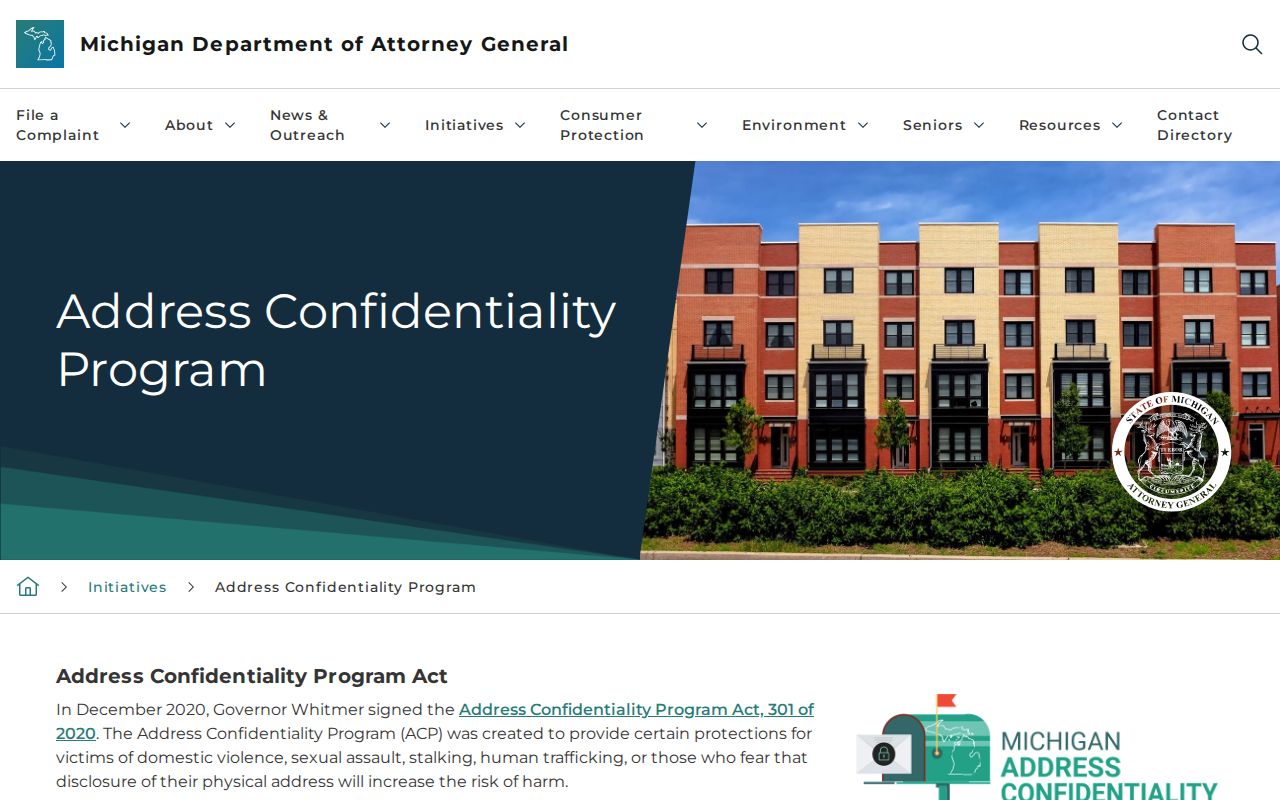
Protected records are an access boundary, not a research gap to work around. Confirm a public result with the custodian and respect the limits that apply.